
Financial and Banking
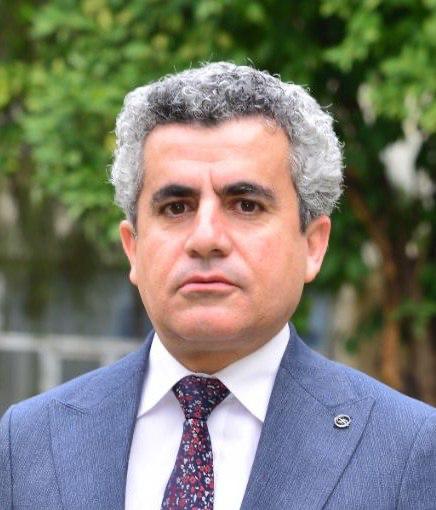
Head of department
Dr. Ameer Saleem Muhammed Assistant Professor Department of Finance and Banking Salahaddin University-Erbil
Academic Journey
-
🎓 B.Sc. in Economics
Thesis: Higher Education Expenses (2000)
Economic Department - Administration and Economics - Salaheddin University.
-
📚 M.Sc. in Economics
Thesis: Rural Poverty (2007)
Economic Department - Administration and Economics - Salaheddin University.
-
🔬 Ph.D. in Economics
Thesis: Fiscal Policy (2019)
Economic Department - Administration and Economics - Salaheddin University.
To comprehend financial development indicators and to prepare financial and banking professionals who excel in their fields and adapt to technological advancements and other developments within the financial and banking sector.
VisionTo fulfill the demands of the labor market in the financial and banking sector by providing specialized academic professionals with extensive experience and skills in finance and banking.
Learning Outcomes
-
1. Financial & Banking Terminology
Students will gain thorough knowledge of financial and banking terminology in English, read and analyze specialized texts and reports, and improve oral and written communication skills in professional contexts. They will also use English effectively in banking and finance, enhancing interaction with global markets.
-
2. Property & Vehicle Insurance
Students will understand basic concepts of property and vehicle insurance, develop skills in risk assessment and claims handling, and apply insurance knowledge effectively in the workplace, achieving high proficiency in risk management and improving service quality.
-
3. Corporate Governance Framework
Students will understand the theoretical and practical framework of corporate governance, develop analytical skills to evaluate governance structures, and prepare reports complying with regulatory standards. They will also enhance proficiency in implementing effective governance practices for corporate transparency and accountability.
-
4. Deposit Insurance & Management Concepts
Students will gain in-depth knowledge of deposit insurance systems, analyze relevant policies, and suggest improvements for financial system stability. They will apply this knowledge to protect savings and enhance banking system confidence. They will also be introduced to management concepts and theories, developing leadership and decision-making skills, and using strategic management tools for optimal institutional performance.
-
5. Advanced Accounting Standards
Students will delve into advanced accounting standards, acquire skills to prepare and analyze complex financial statements, and apply financial analysis to improve the accuracy and effectiveness of financial decisions.
-
6. Banking Accounting Principles
Students will understand accounting principles specific to banks, develop the ability to prepare and analyze bank financial statements, and improve financial performance by applying banking standards and regulations.
-
7. Financial Crises Analysis
Students will acquire an understanding of financial crises, their causes, and effects, analyze historical crises, and develop strategies to avoid them. They will enhance financial stability through forecasting and financial analysis tools.
-
8. Kurdish Culture & Communication
Students will be introduced to Kurdish culture, history, and language, developing skills in cross-cultural communication and social analysis. They will gain proficiency in building effective professional and cultural relationships in diverse environments.
-
9. Banking & Insurance Legal Aspects
Students will understand the legal aspects of the banking and insurance sectors, acquire skills to apply relevant laws, and become able to manage legal risks and ensure institutional compliance. They will also learn to apply statistical and economic methods to analyze financial data, using specialized software to develop accurate forecasting models, enhancing analytical proficiency in data-driven financial decisions.
-
10. Global Financial Markets
Students will learn about global financial markets and their economic and political influences, developing risk management skills in an international environment. They will become capable of addressing the challenges of global finance and achieving high financial efficiency.
-
11. Financial Analysis & Performance
Students will master the basic concepts of finance and use financial analysis tools to evaluate financial performance. They will become capable of making informed financial decisions that enhance corporate value.
-
12. Mathematical Methods in Finance
Students will understand mathematical methods in finance and use models to evaluate assets and manage risks. They will acquire a high level of proficiency in analyzing financial problems quantitatively.
-
13. Electronic Banking Technologies
Students will be introduced to electronic banking technologies and their regulatory frameworks, developing skills in using and developing electronic systems. They will become capable of enhancing security and efficiency in modern banking operations.
-
14. Financial Derivative Instruments
Students will understand financial derivative instruments and their usage strategies, acquire the skill of analyzing markets and related risks, and be able to apply effective hedging strategies to maximize returns and minimize risks.
-
15. Advanced Accounting Deep Dive
Students will deepen their knowledge of advanced accounting, develop their ability to prepare and analyze complex financial statements, and enhance their proficiency in producing accurate and transparent reports that support decision-making.
-
16. Credit & Collection Concepts
Students will understand the concepts of credit and collection, develop skills in assessing credit risks and improving collection processes, and become capable of implementing effective policies to reduce non-performing loans and improve financial performance.
-
17. Scientific Research in Finance & Banking
Students will acquire a systematic knowledge of scientific research, develop skills in collecting and analyzing data using quantitative and qualitative tools, and become capable of preparing research reports that support practical solutions in finance and banking.
-
18. Islamic Banking Principles
Students will understand the Shari'a and financial principles of Islamic banking, acquire the skill of designing and offering Shari'a-compliant products, and enhance their proficiency in providing innovative and effective Islamic financial solutions.
-
19. Macroeconomic Concepts & Analysis
Students will be introduced to macroeconomic concepts and analyze data related to output, inflation, and unemployment. They will become able to evaluate economic policies and their impact on markets and institutions.
-
20. Microfinance & Economic Development
Students will understand the role of microfinance in economic development, develop skills in designing and evaluating financial services targeted at target groups, and gain proficiency in supporting sustainable growth through microfinance tools.
-
21. Investment Portfolio Management
Students will understand the theories of investment portfolio management, develop skills in analyzing and evaluating investments, and become able to apply advanced strategies to achieve a balance between risk and return.
-
22. Corporate Governance Structures
Students will acquire knowledge of corporate governance structures and develop skills in evaluating and implementing governance policies. They will enhance their proficiency in managing institutions transparently and effectively.
-
23. Financial Risk Management
Students will understand the types of financial risks and methods of measuring them, develop skills in using quantitative and qualitative tools to manage them, and become able to develop strategic plans to reduce risks and enhance financial stability.
-
24. Financial Markets & Capital Formation
Students will be introduced to the structure of financial markets and their instruments, develop skills in analyzing market trends and trends, and gain proficiency in making investment decisions based on market evaluation and potential returns. They will also understand capital formation, project financing, and company valuation, developing in-depth financial analysis skills, and becoming capable of supporting corporate objectives through strategic financing decisions.
-
25. Financial Analysis Tools & Methods
Students will master the tools and methods of financial analysis and develop performance analysis skills using financial ratios and reports. They will gain proficiency in providing financial recommendations based on accurate and reliable data.
-
26. Statistics & Data Analysis
Students will be introduced to the basic concepts of statistics and their applications, and use statistical software to analyze data. They will enhance their proficiency in supporting decisions based on the results of economic and financial data analysis.
-
27. Cost Systems & Information Analysis
Students will understand cost systems and their applications, develop skills in collecting and analyzing cost information, and become capable of providing reports that support effective control and decision-making in the business environment.
-
28. Management Accounting & Internal Reporting
Students will acquire an understanding of management accounting concepts and tools, develop skills in preparing internal reports and analyzing performance, and achieve proficiency in supporting strategic planning and decision-making within the organization.
Admissions
The Department of banking and Finance offers two types of study options for prospective students, ensuring accessibility and flexibility based on individual circumstances:
- Zankoline (government-funded) Study
- Description: This option provides free tuition for students who meet the eligibility criteria and are accepted through the general centralized admission system, known as "Zancoline."
- Eligibility:
- Applicants must meet the academic requirements of the Ministry of Higher Education and Scientific Research.
- Selection is competitive and based on high school scores, particularly in scientific subjects.
- Benefits:
- Exemption from tuition fees.
- Access to complete university services and facilities.
- Parallel Study (Self-Funded)
- Description: This option allows students who do not secure a Zankoline seat to pursue their studies by paying a tuition fee.
- Tuition Fee: 1,100,000 IQD per year.
- Eligibility:
- Students must meet the minimum academic requirements for admission to the Biology program.
- This option provides additional opportunities for students to catch up on the Zankoline criteria.
- Benefits:
- Access to the same high-quality education, resources, and facilities as Zancoline students.
- Students can pursue their academic goals without being limited by centralized admission quotas.
Admission Requirements for Both Tracks
- Academic Qualifications:
- Completion of high school with a focus on the science track (math).
- Minimum GPA as determined by the Ministry of Higher Education.
- Application Process:
- Apply through the centralized admission system for Zankoline
- Submit required documents, including transcripts, identification, and certificates.
- Language Proficiency:
- Basic proficiency in English, as several courses are delivered in English.
- Kurdish language proficiency is also beneficial.
Academic Advising
The Department of Marketing is dedicated to facilitating students' academic journeys by providing comprehensive academic advising services. These services guarantee that students receive the necessary support to achieve their educational and professional objectives while maintaining academic success.
Academic Advising Services
- Individualized Advising Sessions: Each student is assigned an academic advisor who provides personalized guidance specifically tailored to the student's interests, strengths, and career aspirations. Advisors also support the selection of courses, the development of academic pathways, and the resolution of educational challenges.
- Course Selection and Registration Support: Advisors assist students in selecting appropriate courses each semester to guarantee that they make rapid progress toward graduation. Registration assistance is offered to help students avoid scheduling conflicts and fulfill prerequisite requirements.
- Career Planning and Development: Academic advisors provide helpful advice concerning internships, postgraduate opportunities, and potential career paths. Graduate students may obtain guidance regarding their research interests, thesis topics, and program selection.
- Monitoring Academic Performance: Advisors evaluate student progress and offer assistance when academic obstacles arise. Students are assisted in maintaining their academic progress by implementing early intervention strategies, including tutoring recommendations and study skill seminars.
- Workshops and Seminars: Workshops are conducted regularly to improve student success, including study skills, time management, research techniques, and career development. Advisors may also arrange seminars involving guest speakers from academia, industry, and healthcare to provide students with an understanding of real-world applications of biology.
- Mentorship Programs: Senior students and alumni may assist in mentoring junior students, sharing their experiences and advice to help with academic and career decisions.
Internship Opportunities
The Department of Marketing promotes professional development and practical experience by providing extensive internship opportunities. These internships allow students to gain sensible expertise in real-world environments, thereby bridging the gap between classroom learning and professional practice.
Career Services
The Department of Marketing is dedicated to providing comprehensive career services to assist students in their professional development. These services are intended to assist students in pursuing their career objectives, regardless of whether they intend to pursue graduate studies, enroll in the workforce, or investigate entrepreneurial opportunities. Career services provide students with the skills, resources, and insights to navigate the job market effectively.